Showing posts with label walking. Show all posts
Showing posts with label walking. Show all posts
Friday, January 25, 2013

Wednesday, December 19, 2012
Be the leader
Setting a healthy example involves mothers and fathers who can encourage children to leave the couch
.
What’s happening to our kids that makes them quit wanting to play?
http://www.letsmove.gov/learn-facts/epidemic-childhood-obesity
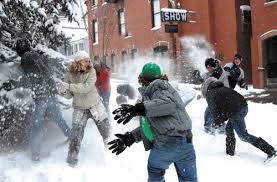
Getting children to be more physically active seems as if it should be so simple. Do you play with your children? When is the last time you threw the Frisbee played catch, had a snowball fight, played tag, raced around the block, had a pillow fight, wrestled, arm wrestled, challenged each other with a yoga pose, or weight lifting. Even your teens will enjoy these activities. You could enroll them in classes and programs during school or afterward that are filled with games, sports and other activities.
i
As parents we need to be role models, make it a lifestyle, teach it not just preach it. Be the mentor, be the instigator, keep it lifelong.
.
What’s happening to our kids that makes them quit wanting to play?
http://www.letsmove.gov/learn-facts/epidemic-childhood-obesity
Getting children to be more physically active seems as if it should be so simple. Do you play with your children? When is the last time you threw the Frisbee played catch, had a snowball fight, played tag, raced around the block, had a pillow fight, wrestled, arm wrestled, challenged each other with a yoga pose, or weight lifting. Even your teens will enjoy these activities. You could enroll them in classes and programs during school or afterward that are filled with games, sports and other activities.
i
As parents we need to be role models, make it a lifestyle, teach it not just preach it. Be the mentor, be the instigator, keep it lifelong.
Saturday, November 10, 2012

Tuesday, November 6, 2012
Fitness for Aging
Fitness as we age
It is important to work on physical fitness life long.
Physical fitness benefits include reduction of heart disease, reduction in Alzheimer’s and most importantly independence. A recent study showed Finnish men who lost more than 15% of their cardiorespiratory fitness over a 10-year period faced a near doubling of their risk of acute MI over the subsequent decade and more than twice the risk of dying of any cause, a new study shows. But as we age fitness programs change. It isn’t realistic to ask the very elderly to jog, participate in spinning classes, hit the elliptical or rowing machine like those who are younger. The issues with mobility and frailty prevent such activities for most. So what does one do for fitness as they age?
Walking, stationary biking, water aerobics, swimming laps with a kick board, recumbent bike or recumbent steppers are some of my favorite means of obtaining aerobic exercise. Also programs such as Sit and Be Fit. http://www.sitandbefit.org/ Any is exercise is better than no exercise. If exercise is done in a group or a class you also get the additional benefits of socialization. As we age socialization is vital. The more socially isolated a person becomes the worse the predictors for health. I found over the years many adhered to light continuous aerobic exercise because of the socialization of the classes more than the physical benefits of the exercise. New interns would come aboard and roll their eyes when they noted the workloads of many of the elderly, then I would point out the ages of many of my clients being in upper 80′s to mid 90′s and regularly attending classes 2-3 times per week, aerobically exercising, resistance training, stretching and socializing.
Resistance training is very important as we age as well as I am frequently promoting the following:
Your Strength is your Independence
This is what allows you to live in your own home, to care for yourself, to get up off the floor if you fall, to carry in the groceries. It is your ability to cope with emergencies, to interact with the grandkids by walking up the bleachers, or across the soccer field, to lift up the two-year old, to get to their musicals across a long parking lot, to walk the hills at the nature center etc.
Here are a few simple strengthening exercise that most can perform. Wall squat
 Wall Squats
With feet 8-12 inches apart and approximately 6 inches from the wall, slide down the wall a few inches. Hold this position as long as able. Push back up to standing. Repeat as many times as possible. Don’t go down to far, and if you fear not being able to stand all the way back up, keep a chair next to you for assistance. Breath out as you push back up.

Toe Raises
This exercise is surprisingly hard for many of the elderly to perform. Go up on tip toes and back down as many times as possible. To make harder try on a stair step or try doing on only one leg.
 Wall push ups
Just like the old-fashioned push up but do against a wall. Breath out as you are pushing yourself back from the wall. Exhale on Exertion! I say this because many hold their breath which is hard on the heart and blood pressure.
Lateral leg exercises
These are really important for maintaining a good gait when we walk as we get older. Lying on side – do in bed – as easier than getting up from the floor. Lift leg out and back down. Do as many as possible.

Be a mentor, assist to make it happen
As most blog readers tend to be younger, pass this advice on to your elders, work out with them, purchase and arrange for transportation to fitness classes, make a big deal out of wanting them to stay fit and healthy to participate in life with you. We all need encouragement at times. Don’t assume being old means sitting in the recliner all day. Keep those in your live vital through physical activity. And have a great day!
Monday, September 24, 2012
Pushing Yourself and Family

The principle is called Overload
To improve fitness one has to push beyond the normal activity in order to improve Vigorous activity even in small amounts improves overall health. Now for sedentary people some doing anything will be of benefit, becomes something is better than nothing. For others who are active to improve physical fitness you have to push to the edge of the comfort zone. Important the no pain no gain rule does not apply!
Here are a few tips from the CDC on how to measure intensity.
How do I know if my child's aerobic activity is moderate- or vigorous-intensity?
Here are two ways to think about moderate- and vigorous-intensity:
Measuring Physical Activity Intensity

Here are some ways to understand and measure the intensity of aerobic activity: relative intensity and absolute intensity.
Relative Intensity
The level of effort required by a person to do an activity. When using relative intensity, people pay attention to how physical activity affects their heart rate and breathing.
The talk test is a simple way to measure relative intensity. As a rule of thumb, if you're doing moderate-intensity activity you can talk, but not sing, during the activity. If you're doing vigorous-intensity activity, you will not be able to say more than a few words without pausing for a breath.
The talk test is a simple way to measure relative intensity. As a rule of thumb, if you're doing moderate-intensity activity you can talk, but not sing, during the activity. If you're doing vigorous-intensity activity, you will not be able to say more than a few words without pausing for a breath.
Absolute Intensity
The amount of energy used by the body per minute of activity. The table below lists examples of activities classified as moderate-intensity or vigorous-intensity based upon the amount of energy used by the body while doing the activity.
Tuesday, September 11, 2012
Get more out of your Walk

Engage your arms!
Make a loose fist, consciously swing your arms, bringing your fist up to the approximate level of your breast bone, and then back to the outside of the hip. Pretend you are trying to move your arms against a force to engage the muscles even more when you walk.
Notice the posture of President Bush - Shoulders back, arms active, stomach in, head forward. Now compare to the gentleman next to him. Who do you think is getting more from their walk?
I show this to make you think about your posture while on a treadmill. Fast walkers on a treadmill who hang on to the bar often have a sway back posture. Slow walkers often lean way forward – I call it the pushing the lawnmower posture. While on the treadmill, try to either not hold on and swing your arms, or hold on with only one arm. This will help you to have a better posture. When you hold on to the rails the entire time, your upper body is stiff and doesn’t move naturally as it does with your regular walking.
Also don’t look down the whole time this leads to forward head or thoracic kyphosis postures. Try to look 15-20 feet ahead of you. Hold your head high. Try to keep your chin parallel to the floor. Squeeze those shoulder blades together and down…this is the military posture or the busty look, tall and proud.
Some people are so stiff with walking, add a little wiggle to your walk allow your shoulders and hips to move naturally, this is very good for your spine. Being stiff and rigid isn’t helpful. Often after open heart surgery people are very stiff in the shoulders and neck. Again swinging the arms helps this.
Tighten your stomach muscles. These support your back, they provide you with core strength. If the belly sags forward it places more stress on your lumbar spine. Tuck your pelvis under your torso.
If your have back issues or balance issues I recommend walking with ski poles. They help you to stand taller, force you to engage your arms with the walk, and you burn more calories on your walk.
Compared to regular walking, ski walking involves applying force to the poles with each stride. Walking with ski poles uses more of their entire body (with greater intensity) and receive fitness building stimulation not present in normal walking for the chest, lats, triceps, biceps, shoulder, abdominals, spinal and other core muscles. This can produce up to a 46% increase in energy consumption compared to walking without poles. It also has been demonstrated to increase upper body muscle endurance by 38% in just twelve weeks.
This extra muscle involvement may lead to enhancements over ordinary walking at equal paces such as:
- increased overall strength and endurance in the core muscles and the entire upper body
- significant increases in heart rate at a given pace
- increasing vascular pathways and oxygen delivery efficiency
- greater ease in climbing hills
- burning more calories than in plain walking
- improved balance and stability with use of the poles
- significant un-weighting of hip, knee and ankle joints
- provides density preserving stress to bones
What about walking with weights?
If you want to walk with weights don’t use more than 1-2 lbs in your hands. Heavier weights tend to stress the neck and spine and are not recommended. Again don’t just hold the weights pump those arms, swing up to breast bone and back to hip. You engage the arms, you burn more calories.
Thursday, August 2, 2012
Walking for health
Walking is a great family health activity.
If you feel your family isn't active enough try to add in a walk each day. A great time to do it is after the evening meal. Gather the family, don't forget to include the grandparents. Stroll around the block or a local path, don't make it hard, just make it enjoyable. This is a time to talk, the relax, to stretch your legs, to enjoy the sights. Exercise doesn't have to always be high intensity either. Make a goal to get your family to walk 3-5 times a week.
Be patient
If your children are young, you may be tempted to just push them in the stroller, but if they can walk get them out and let them walk part of it. When my daughter was young a normal 15-20 minute walk for me could take 45 minutes or more for her to dawdle, explore and partake in the walk. I found if I pushed her in the stroller she slept, and then I didn't get the down time necessary, but if I moved her then she would sleep on return...bonus!
As the children get older it becomes a time to chat about the days events, about concerns, strengths and challenges. It is hard to get teens out, but if you make it into a regular activity they just might surprise you and engage in it regularly. Try not to put too much pressure on them. If they don't then it is time for you and your spouse to reconnect and enjoy each others company.
Include family and friends in the walking activity
Bring the grandparents along, or a neighbour. Again adjust the pace and route according to their abilities. Keep it fun and light, don't start in to politics or issues that are stressful. Take time to watch the wildlife, enjoy nature, watch the sun set, view the clouds, smell the air, and relax.
By establishing routine exercise in the family studies show children more likely to be more physically active in adulthood.
Start your family off with healthy lifestyle sooner rather than later. Your family will likely maintain healthy lifestyles throughout their lives. Be the role model!
Tuesday, July 17, 2012
Sedentary life causes weight gain: How to avoid it in your family
 We can all work to limit the screen habits, not just TV but video games, Ipods, computers. It is hard as our children are growing up in a world we cannot fully understand where everything is linked to a screen. Some of it is great, but it is making us sedentary which then contributes to weight issues and chronic diseases. We must be creative to get families active. One way my family stays active is we challenge ourselves to do a certain number of hike, cross country ski, swims, kayaks per year. The goal may be ten of each. One year we made a goal of walking every trail in the Sleeping Bear Dunes National Park. This was 33 hikes, and it took us a year to accomplish this feat. But what memories!
Reblogged from BBC News http://www.bbc.co.uk/news/health-18829131
TV habits 'can predict kids' waist size and fitness'
 Experts say children should not watch more than two hours of TV a day
Children who increase the number of hours of weekly television they watch between the ages of two and four years old risk larger waistlines by age 10.
A Canadian study found that every extra weekly hour watched could add half a millimetre to their waist circumference and reduce muscle fitness.
The study, in a BioMed Central journal, tracked the TV habits of 1,314 children.
Experts say children should not watch more than two hours of TV a day.
Researchers found that the average amount of television watched by the children at the start of the study was 8.8 hours a week.
This increased on average by six hours over the next two years to reach 14.8 hours a week by the age of four-and-a-half.
Fifteen per cent of the children in the study were watching more than 18 hours per week by that age, according to their parents.
The study said the effect of 18 hours of television at 4.5 years of age would by the age of 10 result in an extra 7.6mm of waist because of the child's TV habit.
Continue reading the main storyCalculate your BMI

As well as measuring waist circumference, the researchers also carried out a standing long jump test to measure each child's muscular fitness and athletic ability.
An extra weekly hour of TV can decrease the distance a child is able to jump from standing by 0.36cm, the study said.
The researchers said that further research was needed to work out whether television watching is directly responsible for the health issues they observed.
Dr Linda Pagani, study co-author from the University of Montreal, said it was a warning about the factors which could lead to childhood obesity.
"The bottom line is that watching too much television - beyond the recommended amounts - is not good," Dr Pagani said.
The American Academy of Pediatrics recommends that children aged over two should not watch more than two hours of television per day.
Dr Pagani added: "Across the occidental world, there have been dramatic increases in unhealthy weight for both children and adults in recent decades.
"Our standard of living has also changed in favour of more easily prepared, calorie-dense foods and sedentary practices.
"Watching more television not only displaces other forms of educational and active leisurely pursuits but also places them at risk of learning inaccurate information about proper eating."
The study said that habits and behaviours became entrenched during childhood and these habits might affect attitudes to sporting activities in adulthood.
Subscribe to:
Posts (Atom)