Showing posts with label children. Show all posts

Wednesday, December 19, 2012

Be the leader

Setting a healthy example involves mothers and fathers who can encourage children to leave the couch


What’s happening to our kids that makes them quit wanting to play?
http://www.letsmove.gov/learn-facts/epidemic-childhood-obesity

Getting children to be more physically active seems as if it should be so simple. Do you play with your children? When is the last time you threw the Frisbee  played catch, had a snowball fight, played tag, raced around the block, had a pillow fight, wrestled, arm wrestled, challenged each other with a yoga pose, or weight lifting. Even your teens will enjoy these activities. You could enroll them in classes and programs during school or afterward that are filled with games, sports and other activities. 
i
As parents we need to be role models, make it a lifestyle, teach it not just preach it. Be the mentor, be the instigator, keep it lifelong.


Saturday, October 20, 2012

Ideas for increasing vegetables in you family


Increasing your families vegetable consumption can be challenging.


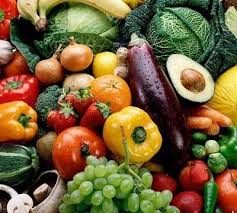
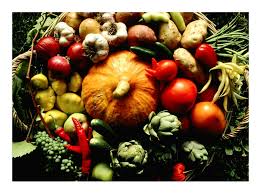
I have had to work to keep my family eating  veggies. It doesn't just happen. Buying vegetables doesn't necessarily mean the family will eat them. I have always pushed vegetables for my family, but when they are in charge of meal preparation, veggies aren't usually part of the preparation. They will naturally head towards carbohydrates, breads, immediate gratification foods. The following are a few ideas of how I work them in to my families diet.

1. If hubby is cooking and you are around remind him to use the fresh produce. If that doesn't work, get it out and assist in cleaning and preparing it. His cooking has a tendency to be light on veggies. Hubby's famous chili tends to consist of onions as the only veggie besides tomato sauce.  I assisted him in adding: tomotillo's, celeriac, green peppers,  hot peppers, tomatoes.

2. In lunches pack the freshest veggies you can find. Carrots, cherry and green peppers work well, a small dish of hummus too. Always add lettuce to sandwiches, or parsley, cilantro, etc. Cucumbers and feta cheese with a little dill packs well for lunches.

3. Kale Chips! Keep them available, add them to lunches, store in containers and bring out a couple of times a week. I have enjoyed  making with spice/herb infused oils, Tuscan blend is our favorite,and/or a locally blended seasoning salt.  Use very little oil. Dehydrated at 100 degrees for two hours is best. They can be made in the oven however my family thinks prefers dehydrated. I think the tend to cook and become a little more bitter if go to long in oven. It is a timing thing.

4. Buy local produce every week. Budget yourself the time and money to purchase fresh produce. Visit your farm markets or join CSA. A CSA is community sustained agriculture programs in which you purchase shares for. Yes can be expensive, so split it with a friend or extended family. This was our first year in a CSA. I loved it and can't wait for it to start up again next year.

The CSA produce was more than my family would eat, and that was after splitting it. To get through the produce was challenging. Every week  there was another share coming and to manage the produce was work! I dehydrated some for the winter, especially dill. I think I have a lifetime supply. We learned to use a great variety of vegetables. That was fun, kind of like on the show Chopped. You are given this box and you have to come up with a tasty recipe. Can anyone give me a suggestion for two foot long daikon radish?

 The menu planning centered on what was in need of using first and building the meal or dish around it. My son's comment "I can't wait for this CSA to be over." Too bad for him that means farmers market, as I am budgeting the same expense on veggies year round. Make your own spaghetti sauce, salsa, slopppy joe sauce, anything that comes from a can or bottle, challenge yourself to make your own. You can find any recipe on the computer now a days, just type in and wallah...all kinds of ideas.


Thursday, September 27, 2012

Urgent need for Physical Activity

The chief cause of obesity is physical inactivity, which is rapidly spreading from North America to the rest of the world. About 31% of the world’s adults, or about 1.5 billion people, are almost completely sedentary, meaning that they do not meet the minimum recommendation of 150 minutes of walking or other moderate activity per week, or about 20 minutes a day.

Teenagers are faring even worse. More than 80 percent of young people ages 13 to 15 worldwide are not getting the hour a day of vigorous exercise recommended for their age group.


Unsurprisingly, North America leads the world in not exercising, with 43.3 percent of Americans not reaching the low recommended threshold. But the world is catching up or, rather, joining us in sitting down. More than 34 percent of Europeans are inactive, 30 percent of Russians, ditto in the Middle East, and about 27 percent of Africans are sedentary.

Those of us that want to exercise regularly must realize that we are working against cultural forces. Stay focused on the best way to live for yourself.

Wednesday, September 26, 2012

How balanced is your life?


 No one expects you to be perfect other than yourself. As often heard we are our own worse critic. However when you reflect on your family think about the wellness wheel. If you were to assess your family how much do you give to each of these domains. For many their wheel isn't round as they devote more time and energy to certain areas such as work, then tend to neglect things like the physical and emotional health. How balanced is your wheel?

Does your family devote time to physical exercise? Do you address the emotional components? A great time to do this is at a family meal. Discuss the struggles, the challenges incurred during the day.

 "Wellness is first and foremost a choice to assume responsibility for the quality of your life. It begins with a conscious decision to shape a healthy lifestyle. Wellness is a mindset, a predisposition to adopt a series of key principles in varied life areas that lead to high levels of well-being and life satisfaction.
A consequence of this focus is that a wellness mindset will protect you against temptations to blame someone else, make excuses, shirk accountability, or collapse in the face of adversity.


Monday, September 24, 2012

Pushing Yourself and Family


The principle is called Overload

To improve fitness one has to push beyond the normal activity in order to improve Vigorous activity even in small amounts improves overall health. Now for  sedentary people some doing anything will be of benefit, becomes something is better than nothing. For others who are active to improve physical fitness you have to push to the edge of the comfort zone. Important the no pain no gain rule does not apply! 

 Here are a few tips from the CDC on how to measure intensity. 

How do I know if my child's aerobic activity is moderate- or vigorous-intensity?

Here are two ways to think about moderate- and vigorous-intensity:
  1. As a rule of thumb, on a scale of 0 to 10, where sitting is a 0 and the highest level of activity is a 10, moderate-intensity activity is a 5 or 6. When your son does moderate-intensity activity, his heart will beat faster than normal and he will breathe harder than normal. Vigorous-intensity activity is a level 7 or 8. When your son does vigorous-intensity activity, his heart will beat much faster than normal and he will breathe much harder than normal.
  2. Another way to judge intensity is to think about the activity your child is doing and compare it to the average child. What amount of intensity would the average child use? For example, when your daughter walks to school with friends each morning, she's probably doing moderate-intensity aerobic activity. But while she is at school, when she runs, or chases others by playing tag during recess, she's probably doing vigorous-intensity activity. 

Measuring Physical Activity Intensity

Here are some ways to understand and measure the intensity of aerobic activity: relative intensity and absolute intensity.

Relative Intensity

The level of effort required by a person to do an activity. When using relative intensity, people pay attention to how physical activity affects their heart rate and breathing.

The talk test is a simple way to measure relative intensity. As a rule of thumb, if you're doing moderate-intensity activity you can talk, but not sing, during the activity. If you're doing vigorous-intensity activity, you will not be able to say more than a few words without pausing for a breath.

Absolute Intensity

The amount of energy used by the body per minute of activity. The table below lists examples of activities classified as moderate-intensity or vigorous-intensity based upon the amount of energy used by the body while doing the activity.

Saturday, September 22, 2012

A GOOD.is Transparency 
I found this today while on web. It is interesting. I certainly hope that we can add more local fresh fruits and vegetables into our lunches. I also question why a starch with the example of pizza, one wouldn't need another serving of a starch, especially if the vegetable was a starchy vegetable. Why can't we offer choices between milk and/or water? Of course not bottled water use a paper cup and pitcher or cooler and have it self serve.
This infographic by GOOD shows the difference between a prison lunch and a school lunch. Both are roughly the same cost (just over $2.60) and contain about the same amount of calories (around 1400). But surprisingly, prisoners get more items to eat and healthier options, with 1/2 cup of vegetables and one serving of fruit or dessert, compared to the school children’s 1/2 cup of vegetables or fruit.

via PSFK: http://www.psfk.com/2012/09/prison-or-school-lunch-healthier.html#ixzz27E3NH8LK

Friday, September 21, 2012

Creative Sweet Treats: Healthy Snack Ideas

Kids come home from school and they are starving, they are looking for food. My middle schooler eat's his lunch at 10:45. They want something fast. If you suggest fruit, it gets boring, and doesn't appeal after they have been watching their friend eat prepackaged unhealthy snacks delivered in the classroom or packed in lunches. So mix it up on occasion try making one of these. You are still getting healthy food, plus that little extra so the family feels they are getting something special.

frozen banana bites Frozen Banana Bites
chocolate kiwi popsicles Chocolate Kiwi Popsicle
Blueberries covered in honey greek yogurt and frozen. Great healthy snack to have around when craving sweets. Blueberries covered in honey greek yogurt and frozen. Great healthy snack to have around when craving sweets.
yogurt bites!Yogurt Bites

I have found Pintrest to be very helpful and encourage the family to pick the snacks they would like to have for the week. It was my compromise after hearing for months "Why can't I have Lunchables?"

Here's the link these pics came from, they are all easy, quick to prepare ahead of time, and go over well with the family.


Wednesday, September 19, 2012

How does your family strength train?

What does your family do to Strength Train?

Many don't incorporate strength training into their fitness routine. Children may be physical with playing soccer, basketball etc.but may not get strength training. By building muscle strength you improve the metabolism, making you less likely to gain excess weight, strengthens the bones, makes you less prone to injury.

When children are very young working with heavy weights in the past was discouraged. The thought on this is that is could hurt the growth plates of the bones, and stunt growth therefore working with heavy weights was discouraged.Research however has disproved this, and it is now recommended everyone participate in some form of strength training.

Most people think of strength training as working with weights.

In fact, the ideal weight-training program for many children need not involve weights at all. “The body doesn’t know the difference between a weight machine, a medicine ball, an elastic band and your own body weight,”   Tree climbing is a favorite in our home, as is a great arm workout. 

 Plank, lunges, push ups, chair arm dips, yoga poses such as powerful pose, boat pose, are ways of building strength without weights. If you do choose weights, start light get 3,5,7,10 lb. weights. Focus on learning technique and endurance, then gradually increase the load.
 

Don't confuse strength training with weightlifting, bodybuilding or powerlifting. These activities are largely driven by competition, with participants vying to lift heavier weights or build bigger muscles than those of other athletes. This can put too much strain on young muscles, tendons and areas of cartilage that haven't yet turned to bone (growth plates) — especially when proper technique is sacrificed in favor of lifting larger amounts of weight.

Tuesday, September 11, 2012


Get more out of your Walk

Engage your arms!
Make a loose fist, consciously swing your arms, bringing your fist up to the approximate level of your breast bone, and then back to the outside of the hip. Pretend you are trying to move your arms against a force to engage the muscles even more when you walk.
Notice the posture of President Bush  - Shoulders back, arms active, stomach in,  head forward. Now compare to the gentleman next to him. Who do you think is getting more from their walk?
 Forward head, not engaging arms or stomach, rounded shoulders.
I show this to make you think about your posture while on a treadmill. Fast walkers on a treadmill who hang on to the bar often have a sway back posture. Slow walkers often lean way forward – I call it the pushing the lawnmower posture. While on the treadmill, try to either not hold on and swing your arms, or hold on with only one arm.  This will help you to have a better posture. When you hold on to the rails the entire time, your upper body is stiff and doesn’t move naturally as it does with your regular walking.
Also don’t look down the whole time this leads to forward head or thoracic kyphosis postures. Try to look 15-20 feet ahead of you. Hold your head high. Try to keep your chin parallel to the floor.  Squeeze those shoulder blades together and down…this is the military posture or the busty look, tall and proud.
Some people are so stiff with walking, add a little wiggle to your walk allow your shoulders and hips to move naturally, this is very good for your spine. Being stiff and rigid isn’t helpful. Often after open heart surgery people are very stiff in the shoulders and neck. Again swinging the arms helps this.
Tighten your stomach muscles. These support your back, they provide you with core strength. If the belly sags forward it places more stress on your lumbar spine. Tuck your pelvis under your torso.
If your have back issues or balance issues I recommend walking with ski poles. They help you to stand taller, force you to engage your arms with the walk, and you burn more calories on your walk.
Compared to regular walking, ski walking  involves applying force to the poles with each stride. Walking with ski poles uses more of their entire body (with greater intensity) and receive fitness building stimulation not present in normal walking for the chest, lats, triceps, biceps, shoulder, abdominals, spinal and other core muscles. This can produce up to a 46% increase in energy consumption compared to walking without poles. It also has been demonstrated to increase upper body muscle endurance by 38% in just twelve weeks.
This extra muscle involvement may lead to enhancements over ordinary walking at equal paces such as:
  • increased overall strength and endurance in the core muscles and the entire upper body
  • significant increases in heart rate at a given pace
  • increasing vascular pathways and oxygen delivery efficiency
  • greater ease in climbing hills
  • burning more calories than in plain walking
  • improved balance and stability with use of the poles
  • significant un-weighting of hip, knee and ankle joints
  • provides density preserving stress to bones
What about walking with weights? 
If you want to walk with weights don’t use more than 1-2 lbs in your hands. Heavier weights tend to stress the neck and spine and are not recommended. Again don’t just hold the weights pump those arms, swing up to breast bone and back to hip. You engage the arms, you burn more calories.

Monday, September 10, 2012

Sugar and school lunches

Whether you pack a lunch or you purchase school lunch consider the amount of sugar you are getting with each serving.  This is a great visual display of sugar content in foods. Also the revamped school lunch program. I want to go back to school to see if it really looks like this. I sure hope so, and I hope it comes from local farms.

Sugar is the number one cause for diabetes and obesity in our youth today. 


Saturday, August 18, 2012

Can you eat healthy when eating fast food? Probably not!

Don't trust the fast food marketing

Prevention Magazine has a really nice piece on McDonald's new 400 calorie of less campaign. It breaks down each item billed as 400 calories or less and analyzes the nutritional content. Don't let the very highly paid and adept marketing of fast food catch  you. The amounts of sodium, sugars, fats and added ingredients are startling. Here are a couple of examples, but I highly recommend you follow the below links and read the entire content, so you don't get caught in their marketing traps. Stay healthy!

Premium Grilled Chicken Ranch BLT Sandwich, grilled: 380 cal

McDonalds' website calls this one "Refined and real, all on the same bun." We're not sure if they meant refined as in "elegant," or refined as in "processed"—but it's more the latter, according to the ingredient list. The chicken contains rib meat, maltodextrin, and sodium phosphates and the "bakery style bun" has high fructose corn syrup, dough conditioners, and ammonium sulfate. This sandwich gives you a quarter of your daily cholesterol, 10 g of fat, 9 grams of sugar, and 1,000 mg of sodium. 
Swap it for: A whole dinner of grilled chicken slathered in barbecue sauce, with a buttered ear of corn—for the same amount of calories. 


Read more: http://www.prevention.com/food/healthy-eating-tips/how-healthy-are-mcdonalds-400-calorie-meals/premium-grilled-chicken-ranch-blt-sandwich-380-cal#ixzz23v5lZ7OY


Mango Pineapple Real Fruit Smoothie (large): 350 cal

McDonald's boasts that every size of their "real fruit smoothie" is under 400 calories. But a large mango pineapple smoothie has a whopping 77 g of sugar—which is the equivalent of eating almost three Snickers bars, in terms of the sugar content. And just in case you're wondering, the "real fruit" includes "clarified demineralized pineapple juice concentrate," which is a sweetener, not a chunk of vitamin-C-packed raw pineapple.
Swap it for: Some whole real fruit, plus filling peanut butter and soy milk, in our Peanut Butter Soy Smoothie instead.


Read more: http://www.prevention.com/food/healthy-eating-tips/how-healthy-are-mcdonalds-400-calorie-meals/mango-pineapple-real-fruit-smoothie-large---350-cal#ixzz23v669lOl


Tuesday, August 7, 2012

Eat your Veggies!!!

How do you get people to eat veggies?

 I wish I had a dollar for every time I have heard someone say they don't like to eat vegetables. Funny how often I would hear this while working in Cardiac Rehabilitation. Coincidence? I don't think so. A healthy diet includes 5 servings a day of fruit and veggies, many people are ok with the fruit but entirely skip the veggies. Women are instructed to get 4 1/2 cups a day of vegetables for heart health. Children are picky and it can take years to get them to eat a variety of vegetables. Don't give up!!! Keep trying new vegetables, new textures, new recipes.

Get your servings each day 

One way to get your veggies in each day is to join a CSA. This is community supported agriculture. You essentially purchase a share of a farm and each week you get your vegetable share. This week my share was 22 lbs of vegetables and included eggplant, potatoes, carrots, tomatoes, tomatillos, squash - zuchinni, yellow and patty pan, dill, cilantro, garlic, onions, bean - green and purple, peppers, cucumbers, and beets. Last week we had similar but added turnips, cabbage and radishes. It is an experiment finding what recipes we will have repeatedly and what ones we will avoid. Tonight's dinner included camelized turnips - these went over well -suprizingly.

Be creative with vegetables

Get away from the traditional boiled or steamed veggies. Try to get creative. Google recipes for vegetables. Turn carrots or asparagus into ribbons, combine unusual flavors, grill veggies, sneak them into meals - chop them small. Combine strong flavors with sweet, try flavored vinegar's with veggies. Recently I made cole slaw with lemon infused vinegar and very little mayo - the whole family commented on how it was the best cole slaw they ever had while not knowing how basic the recipe was - cabbage, carrots, vinegar, sugar, lemon peppes,  and a tiny bit of mayo.

With all these vegetables they become the food which the meal is built around, rather than the typical American diet which builds it's meal around the meat source. Which leaves me with how will I prepare eggplant this week? Baba Ganoush or Eggplant Parmasean?

Thursday, August 2, 2012

Walking for health

 Walking is a great family health activity. 

If you feel your family isn't active enough try to add in a walk each day. A great time to do it is after the evening meal. Gather the family, don't forget to include the grandparents. Stroll around the block or a local path, don't make it hard, just make it enjoyable. This is a time to talk, the relax, to stretch your legs, to enjoy the sights. Exercise doesn't have to always be high intensity either. Make a goal to get your family to walk 3-5 times a week. 

Be patient

If your children are young, you may be tempted to just push them in the stroller, but if they can walk get them out and let them walk part of it. When my daughter was young a normal 15-20 minute walk for me could take 45 minutes or more for her to dawdle, explore and partake in the walk. I found if I pushed her in the stroller she slept, and then I didn't get the down time necessary, but if I moved her then she would sleep on return...bonus!

As the children get older it becomes a time to chat about the days events, about concerns, strengths and challenges. It is hard to get teens out, but if you make it into a regular activity they just might surprise you and engage in it regularly. Try not to put too much pressure on them. If they don't then it is time for you and your spouse to reconnect and enjoy each others company.

Include family and friends in the walking activity

Bring the grandparents along, or a neighbour. Again adjust the pace and route according to their abilities. Keep it fun and light, don't start in to politics or issues that are stressful. Take time to watch the wildlife, enjoy nature, watch the sun set, view the clouds, smell the air, and relax. 

By establishing routine exercise in the family studies show children more likely to be more physically active in adulthood.

Start your family off with healthy lifestyle sooner rather than later. Your family will likely maintain healthy lifestyles throughout their lives. Be the role model!